
Can I Run The Witcher 3 on My PC / Laptop?
CD Projekt Red's open-world RPG from 2015, now really three different technical experiences depending on which build and settings you run.
Check if your PC can run The Witcher 3
Pick your graphics card and processor to check.
Can I run The Witcher 3 on my PC?
Use the checker above to find out in seconds. Pick your graphics card and processor and it compares them against The Witcher 3's official requirements. As a quick guide, you need at least a Nvidia GPU GeForce GTX 660 / AMD GPU Radeon HD 7870 graphics card, a Intel CPU Core i5-2500K 3.3GHz / AMD A10-5800K APU (3.8GHz) processor, and 6 GB RAM of RAM to play at 1080p.
Can I run The Witcher 3 on my laptop?
Yes, if your laptop has a dedicated graphics card around a Nvidia GPU GeForce GTX 660 / AMD GPU Radeon HD 7870 or better and 6 GB RAM of RAM. Laptops with only integrated graphics usually fall short. Enter your laptop's GPU in the tool above to check. Keep in mind that the laptop version of a card runs a little slower than the desktop card of the same name, and heat can lower sustained frame rates.
CD Projekt Red's original 2015 minimum for The Witcher 3 is a GTX 660 or Radeon HD 7870 with 6GB of RAM, low enough that nearly any PC assembled in the last decade clears it on classic settings. The confusion starts once you flip on the free next-gen update from 2022, which layers ray tracing on top of a heavier DirectX 12 renderer. That version demands far more from your CPU, and it has a genuine stutter problem in crowded areas like Novigrad that has nothing to do with graphics horsepower.
Run your parts through the checker above against the 2015 baseline first, then work through the tables below to see what next-gen and ray tracing actually cost, along with measured frame rates on common cards. A third build is on the way too: CD Projekt Red's free Remastered update lands September 29, 2026, lifting the official minimum to a GTX 1660 and adding path tracing. Each section that follows breaks down one of the three builds so you can match your hardware to the right set of numbers.
The Witcher 3 system requirements
| Minimum | Recommended | |
|---|---|---|
| Processor (CPU) | Intel CPU Core i5-2500K 3.3GHz / AMD A10-5800K APU (3.8GHz) | Intel Core i5-7400 / Ryzen 5 1600 |
| Graphics card (GPU) | Nvidia GPU GeForce GTX 660 / AMD GPU Radeon HD 7870 | Nvidia GTX 1070 / Radeon RX 480 |
| Memory (RAM) | 6 GB RAM | 8 GB RAM |
| Operating system | Windows 10 64-bit | 64-bit Windows 10/11 |
| DirectX | Version 11 | Version 12 |
| Storage | 50 GB available space | 50 GB available space |
Storage: 50 GB for the current build. The free Remastered update landing September 29, 2026 raises that to about 70 GB. An SSD isn't required for the old minimum spec, but it makes a real difference once you turn on the next-gen or Remastered renderer.
Full performance tiers
| Tier | Target | CPU | GPU | RAM |
|---|---|---|---|---|
| Minimum (classic, DX11) | 1080p Low, 30 fps | Core i5-2500K / A10-5800K | GTX 660 / RX HD 7870 | 6 GB |
| Recommended (next-gen High, ray tracing off) | 1080p High, 60 fps | Core i5-7400 / Ryzen 5 1600 | GTX 1070 / RX 480 | 8 GB |
| Ray tracing (1080p) | 1080p, ray-traced shadows and AO, 30-60 fps with upscaling | Core i7-8700 / Ryzen 5 3600 | RTX 2060 / RX 6700 XT | 16 GB |
| Ray tracing Ultra (1440p, full RT) | 1440p, all RT effects, 60 fps with DLSS/FSR | Core i7-9700K / Ryzen 7 3700X | RTX 3080 / RX 6800 XT | 16 GB |
| Remastered Minimum (from Sept 29, 2026) | 1080p, new baseline, 30 fps | Core i5-8400 / Ryzen 5 2600 | GTX 1660 6GB / RX 5500 XT 8GB / Arc A580 | 12 GB |
| Remastered Recommended | 1080p/1440p, 60 fps | Core i7-8700K / Ryzen 5 3600X | RTX 2060 SUPER / RX 6600 XT / Arc B580 | 16 GB |
| Remastered path tracing (4K) | 4K path tracing with DLSS and frame generation | Core i9-14900K / Ryzen 7 9800X3D | RTX 5090 | 32 GB |
The Witcher 3 FPS by graphics card
| Graphics card | 1080p | 1440p | 4K | Notes |
|---|---|---|---|---|
| GTX 1050 Ti | ~40-45 (classic, Medium) | , | , | Fine for the old build. Skip next-gen; the DX12 renderer runs poorly on it. |
| GTX 1060 6GB | ~55-60 (classic, High) | , | , | About 40-50 on next-gen High with ray tracing off. RT is off the table. |
| RX 580 | ~55-65 (classic, High) | , | , | Similar story to the GTX 1060: solid on classic, playable but capped on next-gen. |
| RX 6600 | ~85-95 (next-gen High, RT off) | , | , | One of the better budget picks for the current build. Leave RT off. |
| RTX 2060 | ~75-85 (next-gen High, RT off) | ~55-60 | , | With RT on and DLSS Quality, expect roughly 40-50 at 1080p. |
| RTX 3060 | ~90-100 (next-gen High, RT off) | ~55-65 | , | With RT on: about 45-55 at 1080p using DLSS Quality. |
| RTX 4060 | ~90-95 (next-gen, optimized settings) | ~60-65 | , | RT plus DLSS Quality lands close to 60 at 1080p. |
| RTX 4070 | ~130+ (next-gen, RT off) | ~80-85 | ~50-55 | Comfortable with RT on at 1080p/1440p using DLSS. |
| RTX 4090 | , | ~120+ (next-gen, RT maxed) | ~70-80 (RT maxed, DLSS Quality) | The card the Remastered path tracing mode is really built around. |
These are approximate 1080p/1440p/4K figures at High or Ultra settings without HairWorks, gathered from public benchmarks. Real numbers move with your CPU, drivers, and which area of the map you're in, and next-gen numbers in particular swing more than most games because of the stutter issue covered below.
Can these graphics cards run The Witcher 3?
| Graphics card | Verdict | Notes |
|---|---|---|
| GTX 1050 Ti | Playable | At the minimum bar. 1080p low to medium, drop a setting if needed. |
| GTX 1650 | Playable | Meets minimum. Low to medium at 1080p, tune for a steady rate. |
| RX 570 | Playable | Clears the minimum. 1080p low to medium, better with upscaling. |
| RX 580 | Playable | Runnable at minimum. Low to medium 1080p, ease settings back. |
| GTX 1060 6GB | Playable | Meets the bar. Low to medium settings at 1080p. |
| GTX 1650 Super | Playable | At the minimum bar. 1080p low to medium, drop a setting if needed. |
| GTX 1660 | Playable | Minimum covered. 1080p low to medium is the target. |
| GTX 1660 Super | Playable | Clears the minimum. 1080p low to medium, better with upscaling. |
| RTX 3050 | Playable | Meets minimum. Low to medium at 1080p, tune for a steady rate. |
| GTX 1660 Ti | Playable | Minimum covered. 1080p low to medium is the target. |
| RX 6600 | Runs well | Exceeds recommended. 1080p high is comfortable, 1440p fine. |
| RTX 2060 | Runs well | Recommended tier or better. High 1080p, with room for 1440p. |
| RTX 4050 | Runs well | Above recommended. 1080p high is easy, and 1440p works too. |
| Arc A750 | Runs well | Strong fit. High settings at 1080p, 1440p within reach. |
| RTX 3060 | Runs well | Beats the recommended spec. Comfortable high 1080p, playable 1440p. |
| RX 6600 XT | Runs well | At or above the recommended card. Smooth 1080p high, 1440p realistic. |
| RX 7600 | Runs well | Recommended tier or better. High 1080p, with room for 1440p. |
| RX 6700 XT | Runs well | At or above the recommended card. Smooth 1080p high, 1440p realistic. |
| RTX 4060 | Runs well | At or above the recommended card. Smooth 1080p high, 1440p realistic. |
| RTX 3060 Ti | Runs well | Above recommended. 1080p high is easy, and 1440p works too. |
| RTX 3070 | Runs well | At or above the recommended card. Smooth 1080p high, 1440p realistic. |
| RTX 4070 | Runs well | Strong fit. High settings at 1080p, 1440p within reach. |

You're really asking about one of three different games
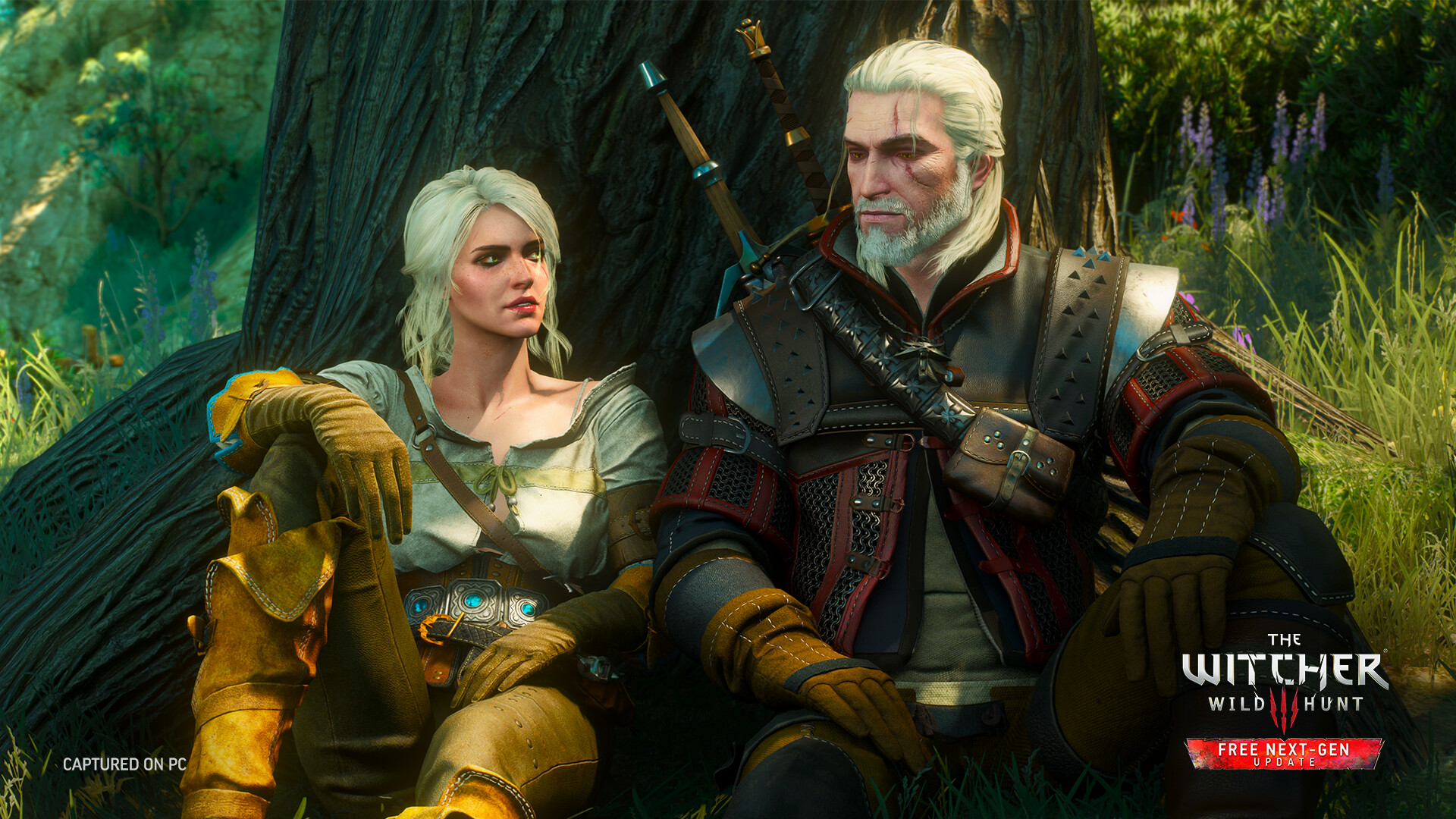
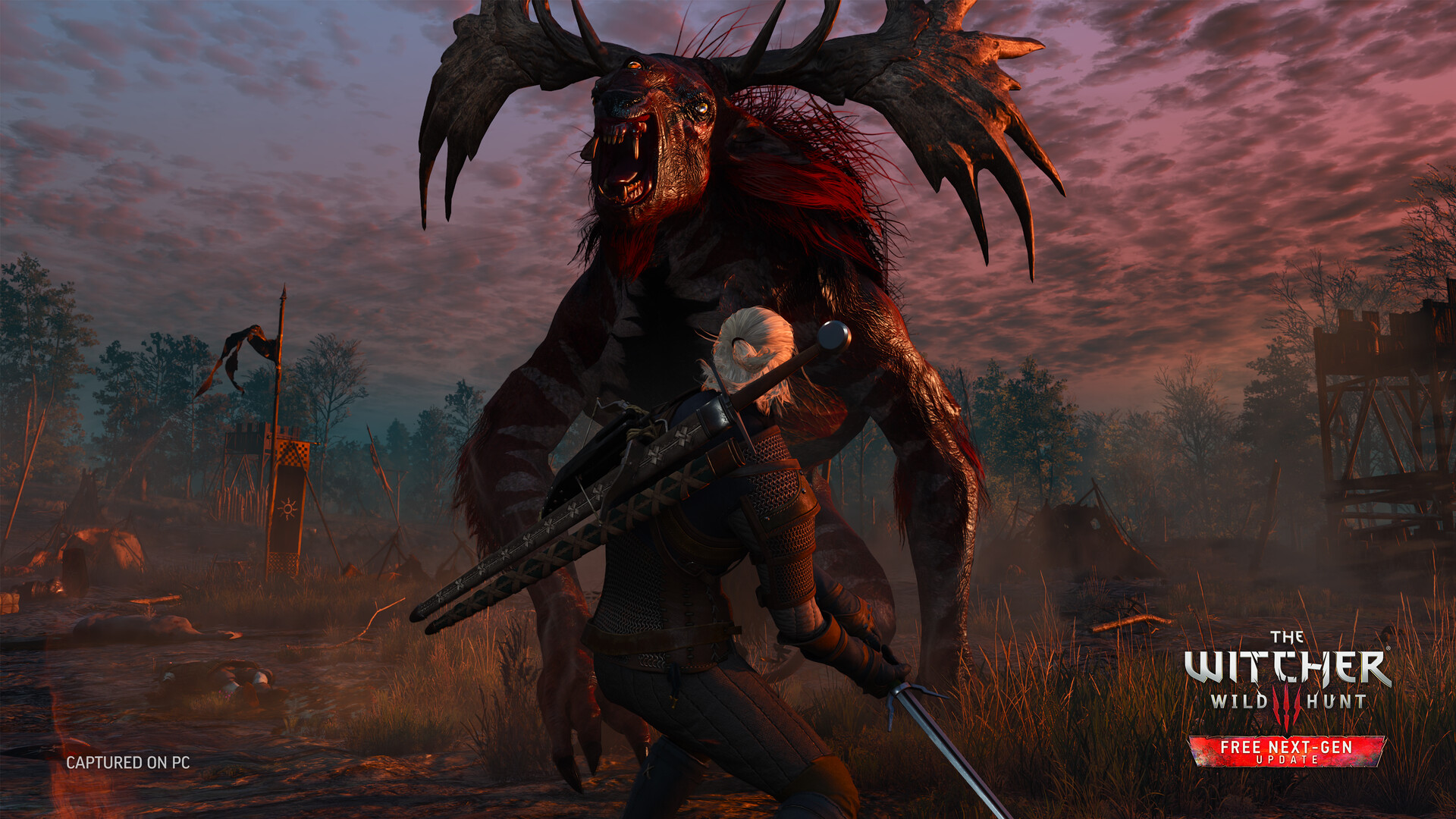
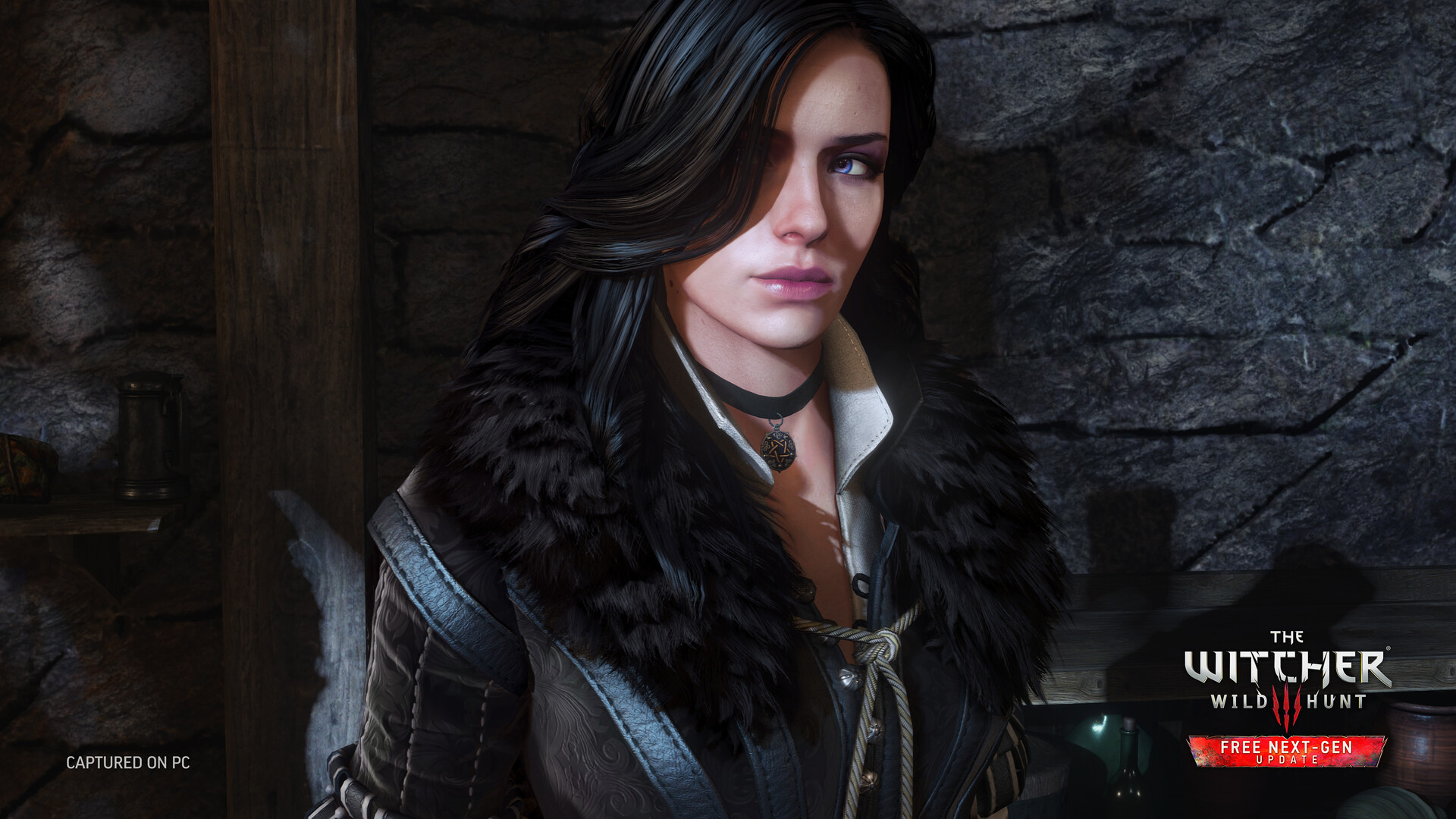
The Witcher 3 on Steam is a single listing, but it can behave like three separate games depending on what you run. The classic build is the original 2015 release: DirectX 11, no ray tracing, and light enough that a decade-old GPU handles it at 1080p High without much drama. The next-gen build, added as a free update in December 2022, switched the default renderer to DirectX 12 and bolted on ray-traced shadows, ambient occlusion, global illumination and reflections, updated character models, and a longer draw distance. It looks noticeably better, and it also asks a lot more of your CPU.
A third version is coming. CD Projekt Red announced The Witcher 3: Wild Hunt Remastered for September 29, 2026, as a free upgrade for existing owners on PC, PS5, Xbox Series X/S, and Switch 2. It adds path tracing, ray reconstruction, ray-traced hair, DLSS 4.5, FSR 4, and a combat and movement overhaul, and it raises the official minimum GPU from a GTX 660 all the way to a GTX 1660. If your PC only just clears the current minimum, plan on staying on the classic build once Remastered lands rather than assuming the free upgrade is automatically for you.
Why next-gen stutters, and the easy fix
The next-gen build's biggest complaint isn't low frame rates, it's stutter, and it's a CPU problem more than a GPU one. Riding fast through Velen or walking through Novigrad triggers streaming hitches as the game loads new assets, and the DirectX 12 renderer compiles shaders the first time a new effect appears on screen, which causes brief freezes that repeat every time you hit something new. Owners of even high-end CPUs have reported the game dropping to a fraction of its normal frame rate in Novigrad specifically.
If you don't care about ray tracing, the fix is simple: switch back to DirectX 11 in the in-game graphics menu, or roll back to the classic build entirely through Steam's Properties, Betas tab, and picking the Classic option (GOG offers the same rollback; Epic Games Store does not). DX11 keeps the updated textures and models from next-gen but skips the shader-compilation stutter almost completely, and it's the version most people with a mid-range or older CPU end up preferring.
Is ray tracing worth turning on
Ray tracing in The Witcher 3 covers shadows, ambient occlusion, global illumination, and reflections, and each one can be toggled separately. Realistically you want at least an RTX 2060 or RX 6700 XT to use any of them at 1080p with upscaling, and a card like an RTX 3080 or RX 6800 XT before you'd want to run the full set at 1440p. Below an RTX 2060, leave every RT option off; the hit to frame rate is large and the visual gain over the already-upgraded next-gen lighting is small by comparison.
The upcoming Remastered build pushes this further with path tracing, which recalculates lighting far more accurately and costs far more performance. Early reporting puts a stable native 4K at 60 fps with path tracing out of reach even for an RTX 5090 without frame generation doing a lot of the work. Treat path tracing the way Cyberpunk 2077 players treat Overdrive mode: a showcase feature for the newest, most expensive cards, not something a typical gaming PC is expected to run.
Running it well on a weaker PC
The Witcher 3's classic settings are a decade old, so this is one of the few current AAA-adjacent titles where an older laptop or a budget desktop genuinely has a good time. On integrated graphics like Intel Iris Xe, dropping to the DX11 classic build, Low settings, and 720p gets you into the 30-45 fps range in most outdoor areas, which is playable if not smooth. Turning HairWorks off helps everywhere, since it's a heavy option that adds little outside of close-up cutscenes.
If your card is below the next-gen recommended spec, don't feel like you're missing the real game by sticking to classic. It has the same story, the same world, and after a 2024 patch it even received the option to keep some of the next-gen texture improvements while running the lighter DX11 renderer. Save the next-gen or Remastered builds for when your hardware, especially your CPU, is ready for them.
Can I run The Witcher 3? Your questions answered
Classic is the original 2015 build on DirectX 11 with no ray tracing. Next-gen, added free in December 2022, moved to DirectX 12, added ray-traced shadows, ambient occlusion, global illumination and reflections, and improved textures and models, but it also introduced a CPU-bound stutter problem that classic never had.
On classic DX11 settings it leans GPU, like most games from 2015. On the next-gen DX12 build it becomes noticeably more CPU-dependent, since shader compilation and world streaming both hit the CPU hard, which is why the stutter in areas like Novigrad shows up even on strong graphics cards.
Yes. The Witcher 3: Wild Hunt Remastered launches September 29, 2026, on PC, PS5, Xbox Series X/S, and Switch 2, and it's a free upgrade for anyone who already owns the game. It adds path tracing, ray reconstruction, DLSS 4.5, FSR 4, and a combat overhaul, and it raises the official minimum PC spec from a GTX 660 to a GTX 1660.
Not necessarily. Remastered's new minimum is a Core i5-8400 or Ryzen 5 2600, a GTX 1660 6GB, RX 5500 XT, or Arc A580, and 12GB of RAM, well above the original 2015 minimum. If your PC is below that, you can stay on the classic build by rolling back through Steam or GOG's Betas tab; that option isn't available on Epic Games Store.
For the classic build, yes, 6GB is the official minimum and 8GB gives you headroom. For the next-gen build, 8GB is the listed minimum too, but 16GB is a more comfortable target if you're also running ray tracing or a lot of background apps. Remastered's minimum jumps to 12GB, so 16GB becomes the sensible baseline going forward.
The current Complete Edition, including both expansions, is about 50GB on PC. The Remastered update coming September 29, 2026 increases that to roughly 70GB because of the upgraded textures and new lighting data.
Nine times out of ten this traces back to the next-gen DX12 build, either compiling shaders the first time a new effect appears or streaming fresh areas into memory, and it hits hardest in Novigrad and Toussaint. Switch the graphics API to DirectX 11 in the settings menu, or roll back to the classic version entirely, and the freeze-and-stutter pattern clears up for most players.
No. The next-gen build's better textures, models, and lighting all apply with ray tracing off. RT adds more accurate shadows and reflections on top of that, but it's an optional layer, and most players with a card below an RTX 2060 or RX 6700 XT are better off skipping it.
Yes. The next-gen update added Nvidia DLSS and AMD FSR upscaling, and the Remastered update adds newer versions, DLSS 4.5 and FSR 4, plus frame generation on supported cards. Turning upscaling on is one of the easiest ways to claw back frame rate if ray tracing is enabled.
The original 2015 minimum is a Core i5-2500K or A10-5800K CPU, a GTX 660 or Radeon HD 7870 GPU, and 6GB of RAM on DirectX 11. That's what the checker above tests against. Once Remastered arrives, the new official minimum becomes a Core i5-8400 or Ryzen 5 2600 with a GTX 1660 6GB and 12GB of RAM.
For a smooth 1080p High experience on the next-gen build with ray tracing off, CD Projekt Red recommends a Core i5-7400 or Ryzen 5 1600, a GTX 1070 or RX 480, and 8GB of RAM. Remastered's recommended spec is higher: a Core i7-8700K or Ryzen 5 3600X with an RTX 2060 SUPER, RX 6600 XT, or Arc B580, and 16GB of RAM.
No. The Witcher 3 only ever shipped with DirectX renderers: DX11 on the classic build and DX12 on next-gen. There's no Vulkan or OpenGL option, so on Linux it runs through Proton's DirectX translation layer rather than a native Vulkan renderer.
Open Settings, then General or Graphics, and look for the DirectX API option, then switch it from DX12 to DX11. It keeps the next-gen textures and models while dropping the shader-compilation stutter. If you'd rather have the original classic build entirely, roll it back through Steam's Properties, Betas tab, or GOG's equivalent. Epic Games Store doesn't offer that rollback.
Not officially. Turning V-Sync off in the graphics menu removes the soft cap and lets the game run as high as your hardware allows. Frame rates well above 100 have occasionally caused minor physics and animation quirks in the older classic build, so if you want a clean number, capping around 120-144 fps through your GPU driver control panel is the safer choice.
No, not really. The official minimum is 6GB, and 4GB sits below that even for the light classic build. You can sometimes limp through at Low settings with nothing else running in the background, but expect stutter from disk paging. Treat 8GB as the real floor and 16GB as comfortable if you also want the next-gen build.
It clears the bar. The RTX 3050 matches The Witcher 3's minimum, so 1080p on low to medium is realistic once you tune a few settings.
Yes, on modest settings. The GTX 1650 meets what The Witcher 3 needs at minimum, so 1080p low to medium is the sweet spot. Around 45-50 fps at 1080p on classic High. Stick to classic; next-gen's DX12 renderer runs rough on it.
Fine for a lighter setup. The GTX 1060 6GB clears The Witcher 3's minimum, so target 1080p low to medium and adjust down for a steady rate. About 55-60 fps at 1080p High on classic, closer to 40-50 on next-gen with ray tracing off.
Fine for a lighter setup. The RX 580 clears The Witcher 3's minimum, so target 1080p low to medium and adjust down for a steady rate. Roughly 55-65 fps at 1080p High on the classic build, similar to a GTX 1060.
For sure. The RTX 4060 outpaces The Witcher 3's recommended card, leaving you high 1080p now and 1440p whenever you like. Around 90-95 fps at 1080p next-gen High, close to 60 fps at 1080p with ray tracing and DLSS Quality on.
No trouble at all. The RTX 3060 meets or beats what The Witcher 3 recommends, so 1080p high runs well and 1440p is realistic. About 90-100 fps at 1080p next-gen High with RT off, or roughly 45-55 with ray tracing and DLSS Quality.
Plenty of power here. The RTX 2060 is above The Witcher 3's recommended tier, so high 1080p is smooth and 1440p is a fair target. Around 75-85 fps at 1080p next-gen High with RT off, dropping to roughly 40-50 with ray tracing and DLSS Quality on.
Good enough to play. The GTX 1660 sits at The Witcher 3's minimum, so expect 1080p low to medium and a bit of tuning for smoothness.
The GTX 1660 Super gets you in. It meets The Witcher 3's minimum, so low to medium at 1080p works, and turning a couple of things down keeps it steady.
Yes, comfortably. The RX 6600 sits at or above The Witcher 3's recommended card, so 1080p on high is smooth and 1440p is well within reach. Around 85-95 fps at 1080p on next-gen High with ray tracing off.
Fine for a lighter setup. The GTX 1660 Ti clears The Witcher 3's minimum, so target 1080p low to medium and adjust down for a steady rate.
Comfortably, yes. The RTX 3060 Ti clears The Witcher 3's recommended bar, which puts high 1080p and 1440p both in reach.
Yes, with room to spare. The Witcher 3 recommends less than the RTX 4050 offers, so expect smooth 1080p high and a playable 1440p.
Good enough to play. The GTX 1050 Ti sits at The Witcher 3's minimum, so expect 1080p low to medium and a bit of tuning for smoothness.
No trouble at all. The RTX 4070 meets or beats what The Witcher 3 recommends, so 1080p high runs well and 1440p is realistic. Over 130 fps at 1080p with RT off, around 80-85 at 1440p, and it handles 1080p or 1440p ray tracing with DLSS comfortably.
CD Projekt Red shipped a native Apple Silicon build for The Witcher 3 in 2024, running directly through Metal with no Windows layer needed. An M1 chip manages roughly 30-60 fps depending on whether you're indoors or in open country, and the Pro and Max chips run noticeably higher at 1080p or 1440p on medium to high settings. Ray tracing performance on Mac hasn't been detailed by CD Projekt Red, so treat it as untested.
Yes, on the classic build. Intel Iris Xe and similar integrated chips can hold 30-45 fps at 720p on Low settings with DirectX 11 and HairWorks off. Older integrated graphics like Intel UHD 620 will struggle more and should drop resolution further. Avoid the next-gen DX12 build on any integrated GPU; it isn't built for that class of hardware.
A Chromebook can't run The Witcher 3 locally, full stop, since ChromeOS isn't built for that. What it can do is stream it through GeForce Now, which supports both the classic and next-gen builds, so a solid internet connection stands in for the graphics card you don't have.
The Witcher 3 carries a Valve Verified rating, and the classic build holds a steady 30-40 fps on the Deck's built-in default preset. Avoid DirectX 12 and ray tracing on any handheld: next-gen's numbers drop well below 30 fps there. Switch to DX11 with Low-to-Medium settings instead and you're back to a stable 40-60 fps depending on the area.
On classic settings, almost any GPU from the last decade holds 60 fps at 1080p High, including a GTX 1060 or RX 580. On next-gen with ray tracing off, an RTX 2060 or RX 6600 gets you close to 60 at 1080p High. With ray tracing on, you'll want at least an RTX 3060 with DLSS Quality to stay near 60 at 1080p.
On classic or next-gen with ray tracing off, an RTX 3060 or RX 6700 XT handles 1440p comfortably. Add ray tracing and you'll want an RTX 3070 or better with DLSS Quality to keep 1440p smooth.
For 4K without ray tracing, an RTX 3070 or better paired with DLSS or FSR gets you a good result. With ray tracing on at 4K, plan on an RTX 4080 or 4090, and for the upcoming Remastered path tracing mode at native 4K, even an RTX 5090 needs frame generation to hold a stable 60 fps.
Ultra without ray tracing is achievable on an RTX 3060 or RX 6700 XT class card at 1080p, or an RTX 3070 at 1440p. Ultra with every ray-traced effect enabled is a much higher bar, realistically an RTX 3080 or RX 6800 XT for 1440p, or an RTX 4080/4090 for 4K.
For the classic build, yes, 4GB covers 1080p High comfortably. On the next-gen build with ray tracing on, 4GB starts to run tight at 1080p and can cause stutter as textures swap in and out; 6GB or more is the safer floor once RT is involved.
On classic DX11 settings, yes, a modern i3 or Ryzen 3 handles it fine since the game is GPU-bound there. On the next-gen DX12 build, a budget quad-core CPU is much more likely to hit the Novigrad-style stutter, so switching back to DX11 is the practical fix if that's what you're running.
An HDD is fine for the classic build; the official minimum doesn't require an SSD. Once you move to the next-gen or upcoming Remastered build, an SSD noticeably cuts down on texture pop-in and load times, and CD Projekt Red has pointed to storage speed as one factor in the streaming hitches some players see.
Yes, on the classic build. Iris Xe handles 720p Low with DirectX 11 and HairWorks off at roughly 30-40 fps in most outdoor areas, dropping lower in dense towns like Novigrad. Stay away from the next-gen DX12 build; Iris Xe doesn't have the horsepower for it.
Yes on both. PS4 runs the original 2015 build at 1080p and 30 fps. PS5 owners get the free next-gen upgrade, which offers a Performance mode at a dynamic resolution up to 4K at 60 fps with ray tracing off, and a Quality mode with ray-traced shadows and ambient occlusion at 30 fps. The upcoming Remastered update also comes free to PS5, with PS5 Pro getting extra enhancements.
Yes. Series X mirrors the PS5 next-gen options, a 60 fps Performance mode and a 30 fps ray-traced Quality mode, both around 1440p to 4K depending on the scene. Series S targets 1080p to 1440p with the same two modes at a somewhat lower resolution ceiling. The free Remastered update is also coming to both consoles on September 29, 2026.
Yes, the original Switch has a cut-down port that runs at about 720p docked and 540p handheld with a dynamic resolution to hold the frame rate. It looks noticeably softer than PC or the other consoles, since it's built around the original 2015 assets scaled way down.
Yes. The Remastered update brings a proper Switch 2 version launching September 29, 2026, targeting around 1080p docked and 720p handheld, both aiming for 30-40 fps, a large step up from the original Switch port's 720p/540p. It's a free upgrade for anyone who already owns the game on Switch.
Yes, it's one of the better-running big open-world games on the Deck. The classic build with the official Steam Deck preset holds 30-40 fps reliably. Stick to DirectX 11 with ray tracing off; the DX12 next-gen renderer and RT effects don't hold a playable frame rate on the Deck's hardware.
GeForce Now carries The Witcher 3, next-gen update included, so the cloud can cover you if your own PC or laptop can't run high settings or ray tracing locally.
Yes, if you stick to the classic build. The 2015 minimum, a GTX 660 or HD 7870 with 6GB of RAM, is genuinely low by today's standards, and the game still looks and plays well at Low to Medium settings on that kind of hardware. Just skip the next-gen and Remastered builds; they're built for meaningfully newer hardware.
On modern hardware this is usually the next-gen build asking for more CPU or GPU than you have, or it's the well-documented Novigrad stutter baked into the DX12 renderer. Start by updating your GPU driver, then switch to DirectX 11 in the settings menu, and if it's still misbehaving, roll back to the classic build through Steam or GOG's Betas tab.
About 50GB currently for the Complete Edition with both expansions. After the free Remastered update on September 29, 2026, expect roughly 70GB due to the new textures and lighting data.
No, it's a separate, larger upgrade. The 2022 next-gen update added ray tracing and DirectX 12 to the existing 2015 game. Remastered, coming September 29, 2026, goes further with path tracing, ray reconstruction, ray-traced hair, DLSS 4.5, FSR 4, a combat and movement overhaul, and a meaningfully higher minimum PC spec.
Only if you want to run Remastered specifically and your current PC is below a GTX 1660 or Ryzen 5 2600 class machine. You'll still be able to play the classic build afterward by rolling back through Steam or GOG's version options, so an older PC doesn't lock you out of the game entirely.
CD Projekt Red never built a native Linux version, but Proton handles it well enough on Steam that the game carries a Valve Verified rating for Steam Deck. Compatibility and performance track the Windows classic build closely; the next-gen DX12 path is the part that's more hit-or-miss once you're running it through Proton.
For the classic build, yes, those never change. For whichever build becomes the new default once Remastered ships, the requirements jump to the higher Remastered spec covered in the tables above, so it's worth checking back if you're buying or upgrading a PC close to that date.
No. It installed by default going forward, but you can roll it back to the classic 2015 build at any time on Steam or GOG through the game's Properties and Betas menu. Epic Games Store doesn't offer that rollback option.
Officially, an RTX 2060 SUPER, RX 6600 XT, or Intel Arc B580 for the recommended 1080p/1440p 60 fps target, paired with a Core i7-8700K or Ryzen 5 3600X and 16GB of RAM. The minimum steps down to a GTX 1660 6GB, RX 5500 XT, or Arc A580.
The classic and current next-gen builds run fine on Windows 10. The Remastered update's official minimum lists Windows 11, so if you're still on Windows 10 you may need to upgrade the OS to install it once it launches, even if your hardware otherwise qualifies.
Yes, comfortably. It's CD Projekt Red's official recommended GPU for 1080p High at 60 fps on the next-gen build with ray tracing off, and it clears that target with room to spare on the classic build.
Yes, easily. It's the Nvidia card CD Projekt Red names for the Ray Tracing Ultra tier at 1440p with all RT effects on and DLSS enabled, holding a steady 60 fps there.
Yes. It's AMD's equivalent pick for the Ray Tracing Ultra tier, running 1440p with every ray-traced effect on and FSR enabled at around 60 fps.
Yes, and it's overkill for the current build. Even 1080p next-gen with ray tracing maxed barely taxes it. It's really the card CD Projekt Red is targeting for the upcoming Remastered update's path tracing mode at 4K, and even then it needs frame generation to hold a stable 60 fps.
Yes, well above what the game currently needs. It sits a step below an RTX 4090 for ray tracing at 1440p and handles the full RT Ultra tier with DLSS Quality without trouble.
60 fps, not 120. Performance mode targets a dynamic resolution up to 4K at 60 fps with ray tracing off, and Quality mode drops to 30 fps with ray tracing on. There's no 120 fps mode, unlike some other PS5 titles.