
Can I Run ARC Raiders on My PC / Laptop?
A PvPvE extraction shooter from Embark Studios where you loot a ruined Earth while dodging both other players and hostile machines.
Check if your PC can run ARC Raiders
Pick your graphics card and processor to check.
Can I run ARC Raiders on my PC?
Use the checker above to find out in seconds. Pick your graphics card and processor and it compares them against ARC Raiders's official requirements. As a quick guide, you need at least a NVIDIA GeForce GTX 1050 Ti or AMD Radeon RX 580 or Intel Arc A380 graphics card, a Intel Core i5-6600K or AMD Ryzen R5 1600 processor processor, and 12 GB RAM of RAM to play at 1080p.
Can I run ARC Raiders on my laptop?
Yes, if your laptop has a dedicated graphics card around a NVIDIA GeForce GTX 1050 Ti or AMD Radeon RX 580 or Intel Arc A380 or better and 12 GB RAM of RAM. Laptops with only integrated graphics usually fall short. Enter your laptop's GPU in the tool above to check. Keep in mind that the laptop version of a card runs a little slower than the desktop card of the same name, and heat can lower sustained frame rates.
The short answer: yes, on most PCs built in the last five or six years, though how good it looks and how smooth it feels depends on the card. ARC Raiders asks for a GTX 1050 Ti class GPU and 12 GB of RAM at the low end, and an RTX 2070 class GPU with 16 GB of RAM to hit 1440p on high settings. What surprises people is that this is a full Unreal Engine 5 game that skips the traversal stutter and shader compilation freezes that plague most other UE5 releases, so a mid-range PC actually runs it more smoothly than the engine's reputation would suggest.
Line your CPU and GPU up against the official numbers using the checker above. Beyond that, this page covers the extended spec tiers, approximate frame rates across a spread of graphics cards, what actually decides performance here, what to adjust if you're stuttering or short on frames, and the platform-specific details that matter: always-online play, storage, and how it holds up on Steam Deck and consoles.
ARC Raiders system requirements
| Minimum | Recommended | |
|---|---|---|
| Processor (CPU) | Intel Core i5-6600K or AMD Ryzen R5 1600 processor | Intel Core i5-9600K or AMD Ryzen 5 3600 processor |
| Graphics card (GPU) | NVIDIA GeForce GTX 1050 Ti or AMD Radeon RX 580 or Intel Arc A380 | NVIDIA GeForce RTX 2070 or AMD Radeon RX 5700 XT or Intel Arc B570 |
| Memory (RAM) | 12 GB RAM | 16 GB RAM |
| Operating system | Windows 10 or later 64-bit (latest update) | Windows 10 or later 64-bit (latest update) |
| DirectX | Version 12 | Version 12 |
| Storage |
Storage: About 30 GB. An SSD is not required but is strongly recommended for load times, and it is worth keeping closer to 50 GB free once updates and the shader cache are counted.
ARC Raiders FPS by graphics card
| Graphics card | 1080p | 1440p | 4K | Notes |
|---|---|---|---|---|
| GTX 1060 6GB | ~44 | ~30 | ~17 | Below the recommended GPU tier. Stick to Low or Medium textures to stay inside 6 GB of VRAM. |
| GTX 1650 | ~48 | ~32 | , | Runs at Low settings comfortably. 4 GB of VRAM limits how far you can push texture quality. |
| RTX 2060 | ~60 | ~40 | , | Estimated from cards just below and above it. This sits right where the official recommended tier starts. |
| RX 6600 | ~70 | ~48 | ~26 | Comfortable 1080p high, solid 1440p at medium to high. |
| RTX 3060 | ~77 | ~51 | ~29 | A good match for the recommended spec target of 1440p high. |
| RTX 4060 | ~91 | ~60 | ~34 | Hits the game's 60 fps target at 1440p high without upscaling. |
| RTX 4060 Ti | ~95 | ~65 | ~37 | Headroom to add DLSS Quality for extra frames or push settings toward the top preset. |
| RTX 4090 | ~150 | ~180 | ~131 | 1% lows around 84 fps at native 4K in early post-launch testing. Essentially uncapped at 1080p and 1440p. |
These numbers come from early hands-on testing and community benchmarks in the weeks after launch, not a large lab-tested sample, so treat them as a rough guide rather than an exact promise. They will move around with scene, settings, and driver updates, and ARC Raiders is new enough that solid data for some cards, including the RTX 2060 row above, is still thin.
Can these graphics cards run ARC Raiders?
| Graphics card | Verdict | Notes |
|---|---|---|
| GTX 1050 Ti | Playable | Meets minimum. Low to medium at 1080p, tune for a steady rate. |
| GTX 1650 | Playable | Meets the bar. Low to medium settings at 1080p. |
| RX 570 | Playable | Passes minimum. Aim low to medium 1080p, upscaling helps. |
| RX 580 | Playable | Clears the minimum. 1080p low to medium, better with upscaling. |
| GTX 1060 6GB | Playable | At the minimum bar. 1080p low to medium, drop a setting if needed. |
| GTX 1650 Super | Playable | At the minimum bar. 1080p low to medium, drop a setting if needed. |
| GTX 1660 | Playable | Just clears it. 1080p low to medium, smoother after tuning. |
| GTX 1660 Super | Playable | Clears the minimum. 1080p low to medium, better with upscaling. |
| RTX 3050 | Playable | Runnable at minimum. Low to medium 1080p, ease settings back. |
| GTX 1660 Ti | Playable | Meets the bar. Low to medium settings at 1080p. |
| RX 6600 | Playable | Passes minimum. Aim low to medium 1080p, upscaling helps. |
| RTX 2060 | Playable | Meets minimum. Low to medium at 1080p, tune for a steady rate. |
| RTX 4050 | Playable | Meets minimum. Low to medium at 1080p, tune for a steady rate. |
| Arc A750 | Playable | Just clears it. 1080p low to medium, smoother after tuning. |
| RTX 3060 | Playable | Clears the minimum. 1080p low to medium, better with upscaling. |
| RX 6600 XT | Runs well | Above recommended. 1080p high is easy, and 1440p works too. |
| RX 7600 | Runs well | Over the recommended bar. Smooth high 1080p, 1440p realistic. |
| RX 6700 XT | Runs well | Exceeds recommended. 1080p high is comfortable, 1440p fine. |
| RTX 4060 | Runs well | Strong fit. High settings at 1080p, 1440p within reach. |
| RTX 3060 Ti | Runs well | At or above the recommended card. Smooth 1080p high, 1440p realistic. |
| RTX 3070 | Runs well | Strong fit. High settings at 1080p, 1440p within reach. |
| RTX 4070 | Runs well | Exceeds recommended. 1080p high is comfortable, 1440p fine. |
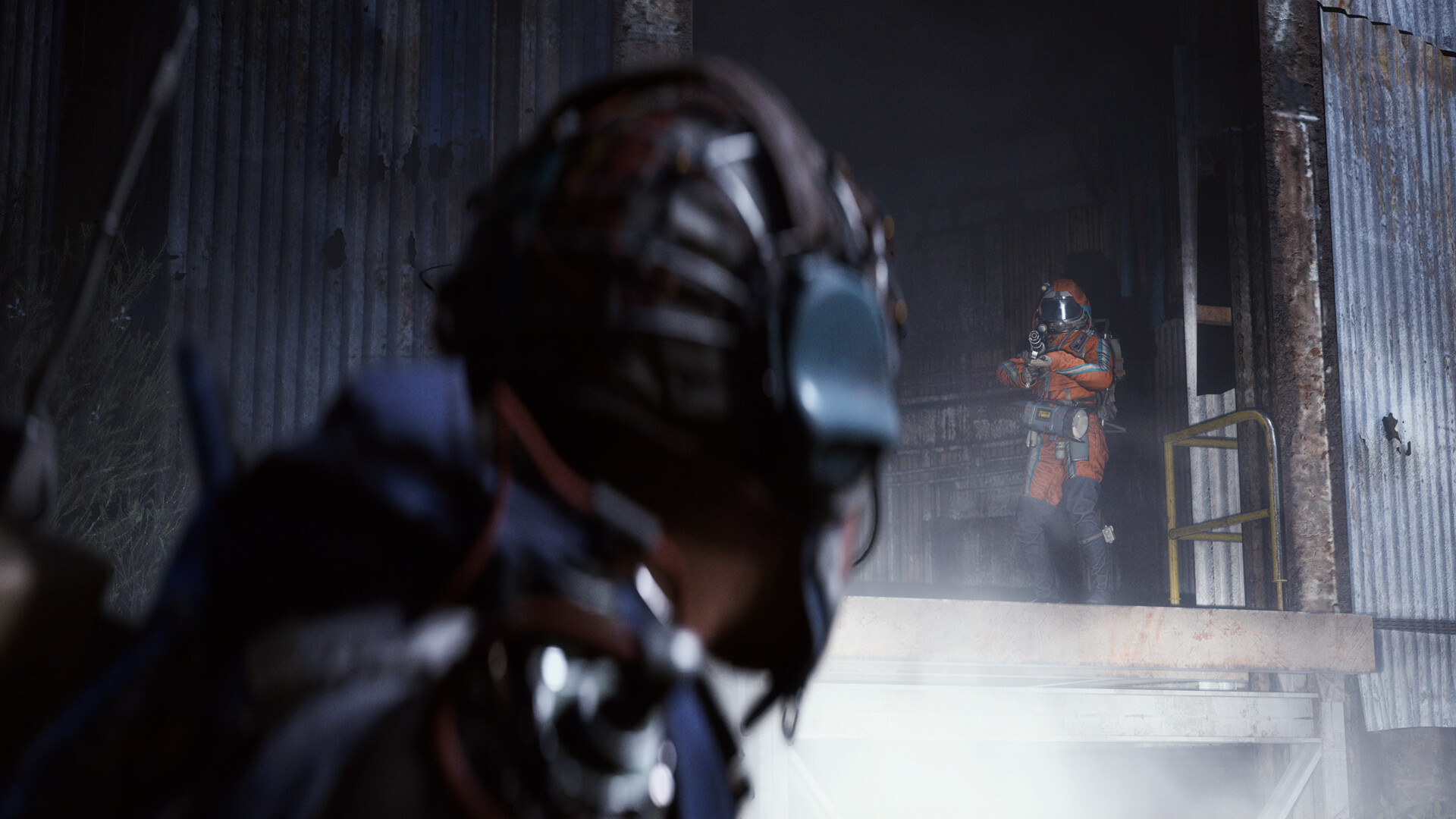
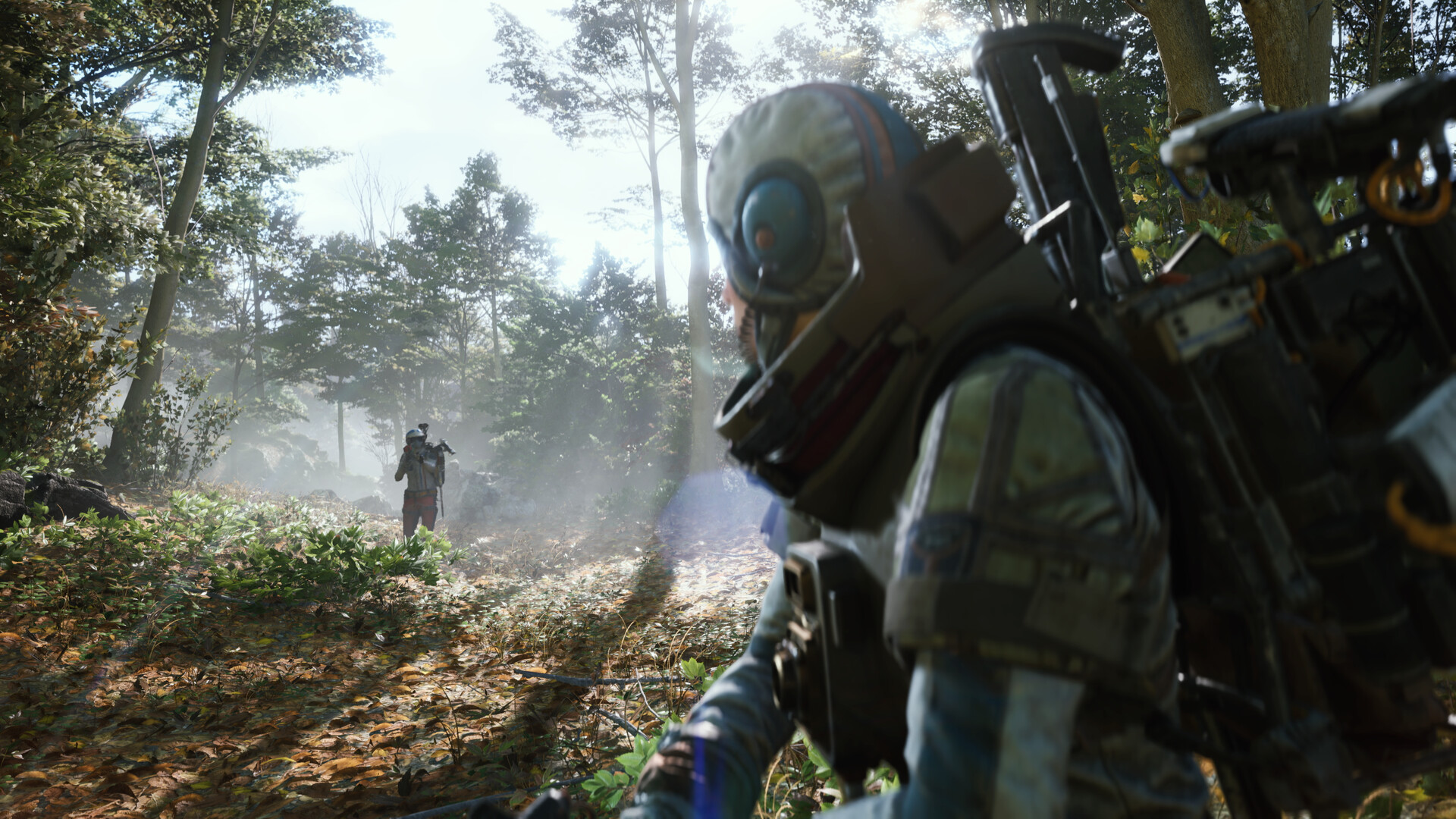

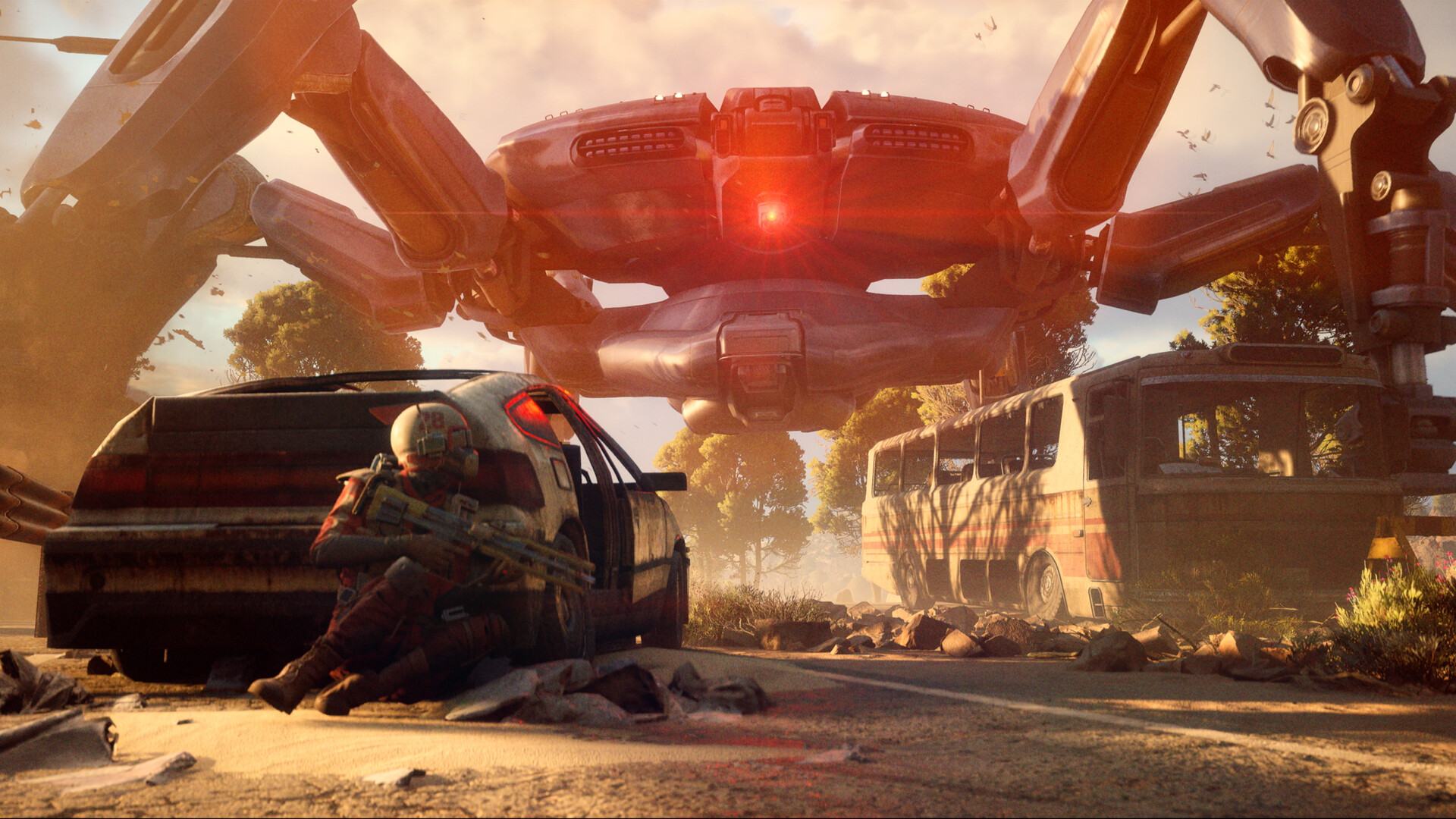
Will ARC Raiders run on your PC
If your PC clears the minimum spec, ARC Raiders will run. The bar is not high: a GTX 1050 Ti or RX 580, a six-year-old Core i5 or Ryzen 5, and 12 GB of RAM gets you 1080p on low settings. The recommended tier, an RTX 2070 or RX 5700 XT with 16 GB of RAM, is aimed at 1440p on high settings at 60 fps, and most cards from the last three or four generations land somewhere between those two points.
What matters more than hitting a specific tier is matching your card to the fps table above. A GTX 1060 or GTX 1650 will get you a playable but modest 1080p experience, while anything from an RTX 3060 up starts to feel comfortable at 1440p. Since this is a competitive extraction shooter, a steady 60 fps or higher matters more here than it does in a single-player game, so lean toward lower settings over higher ones if you have to choose.
What actually decides performance here
ARC Raiders runs on Unreal Engine 5, but Embark deliberately left out the parts of UE5 that cause the most trouble on PC. There is no Nanite, no Lumen, and no virtual shadow maps. Instead the game uses its own lighting system built to run the same way across Nvidia, AMD, and Intel hardware, and early testing found none of the shader compilation stutter that hits games like Stalker 2 or the average Unreal Engine 5 release on first launch or after a driver update.
That makes texture quality and VRAM the real lever, not raw GPU horsepower. Under 6 GB of VRAM, stick to Low textures. At 6 GB, Medium is the safe ceiling. 8 GB and up opens High and Epic, and you want closer to 10 GB if you plan to max the texture slider on a 1440p or 4K display. DLSS, FSR, and XeSS are all supported, but the official minimum and recommended specs are not built around having upscaling turned on, so treat it as a way to claw back extra frames rather than something you need just to hit the base target.
Fixing stutter and low frame rates
If you are below the fps you expect, texture quality is the first setting to touch, especially on a card with 6 GB of VRAM or less. Bring it down a notch before touching resolution scale or shadow quality, since VRAM pressure shows up as stutter and frame time spikes rather than a smooth drop in average fps. After that, turning on DLSS, FSR, or XeSS at Quality mode is usually worth 20 to 30 percent more frames with little visible cost.
Keep GPU drivers current, since Embark has shipped several post-launch patches that changed performance meaningfully. If you are on Steam Deck or another handheld, leave frame generation off. It adds input lag that is more noticeable in a PvP fight than the smoother frame counter is worth.
The gotchas: always-online, storage, and Steam Deck
ARC Raiders has no offline or single-player mode. Every raid connects to Embark's servers, so a stable internet connection matters as much as your frame rate, and a good PC will not save you from server issues or high ping. The install is around 30 GB, small by modern standards, but leave yourself closer to 50 GB free once you count post-launch updates and the shader cache, and an SSD will noticeably cut load times even though the game does not require one.
Steam Deck is officially Verified, which is not something every online shooter manages, because Easy Anti-Cheat has native Linux support here rather than blocking Deck play the way some anti-cheat systems do. Expect roughly 30 to 40 fps at the Deck's native resolution on its default preset. Some players have run into an anti-cheat error that flags a disallowed tool or prohibited software at launch, which is almost always caused by an overlay, mod, or background tool like MSI Afterburner rather than the Deck itself, and closing that program before launching the game usually clears it.
Can I run ARC Raiders? Your questions answered
The floor is a Core i5-6600K or Ryzen 5 1600 processor, a GTX 1050 Ti, RX 580, or Arc A380 graphics card, 12 GB of RAM, and DirectX 12 on Windows 10 or later, aimed at 1080p on low settings.
Step up to a Core i5-9600K or Ryzen 5 3600 processor, an RTX 2070, RX 5700 XT, or Arc B570 graphics card, and 16 GB of RAM, built around 1440p on high settings at 60 fps.
12 GB is the stated floor, but 16 GB is the more realistic target. Stay at 12 GB and you risk stutter whenever Windows and background apps compete with the game for memory, and 16 GB is cheap enough now that there's little reason to stop there.
It isn't required; the game installs and runs fine from a hard drive. An SSD is strongly recommended anyway, since load times and initial world streaming both benefit noticeably, and Embark lists SSD as the recommended storage type on its own spec sheet.
Less than the engine's reputation would suggest. Embark skipped Nanite, Lumen, and virtual shadow maps in favor of a lighter custom lighting system, sidestepping the shader compilation stutter that plagues most other UE5 titles on first load or after a driver update. It still wants a real GPU at higher settings, just not the punishing kind other UE5 releases demand.
All three sit in the settings menu, giving Nvidia, AMD, and Intel GPUs each their own upscaling option. Neither the minimum nor recommended spec assumes upscaling is on, so treat it as bonus headroom rather than something required to hit the base targets.
There's no offline mode. As a PvPvE extraction shooter, every raid connects to Embark's servers, so a stable internet connection is mandatory regardless of how strong your PC is.
It sidesteps the UE5 features usually responsible. No Nanite geometry streaming, no Lumen global illumination compiling shaders on the fly. Embark built a custom lighting system instead, and early testing found the traversal and shader-compile stutter common to UE5 largely absent.
GPU-bound for most players. CPU requirements stay modest, a six to seven-year-old Core i5 or Ryzen 5 clears the minimum, while the graphics card and its available VRAM do most of the work deciding frame rate and texture quality.
DirectX 12 exclusively, with no DX11 fallback. Your GPU and driver need DX12 support, something essentially every card from roughly the last decade already has.
It will. Windows 10 64-bit with the latest update is the stated minimum OS, and Windows 11 works the same way.
It is. PC, PlayStation 5, and Xbox Series X/S all pool together in the same matchmaking rather than splitting the population by platform.
PC has no fixed cap, with frame rate limited only by your hardware and monitor, and a built-in performance overlay in the settings menu covers checking it without a third-party tool. Console behavior depends on which mode you pick, detailed further below.
Runnable. The RTX 3050 covers ARC Raiders's minimum, meaning 1080p low to medium and a smoother feel after a small settings drop.
Playable, yes. The GTX 1650 passes ARC Raiders's minimum bar, so aim for low to medium at 1080p and drop settings if the frame rate dips. Around 48 fps at 1080p on Low settings, with 4 GB of VRAM as the main limit on texture quality.
Fine for a lighter setup. The GTX 1060 6GB clears ARC Raiders's minimum, so target 1080p low to medium and adjust down for a steady rate. Expect roughly 44 fps at 1080p on Low to Medium settings, dropping toward the low 30s at 1440p.
Yes, though keep expectations modest. The RX 580 clears ARC Raiders's minimum, so plan on 1080p at low to medium and trim a setting or two for a steady frame rate.
Yes, comfortably. The RTX 4060 sits at or above ARC Raiders's recommended card, so 1080p on high is smooth and 1440p is well within reach. Around 91 fps at 1080p and 60 fps at 1440p on high settings, hitting the game's 60 fps target without upscaling.
Yes, though keep expectations modest. The RTX 3060 clears ARC Raiders's minimum, so plan on 1080p at low to medium and trim a setting or two for a steady frame rate. About 77 fps at 1080p and 51 fps at 1440p, a solid match for the game's recommended tier.
You can play it. The RTX 2060 is at ARC Raiders's minimum, so keep to 1080p low to medium and lower a setting if it stutters. Estimated in the 55 to 65 fps range at 1080p high, since it sits right at the game's official recommended tier and dedicated benchmarks are still thin.
It clears the bar. The GTX 1660 matches ARC Raiders's minimum, so 1080p on low to medium is realistic once you tune a few settings.
It clears the bar. The GTX 1660 Super matches ARC Raiders's minimum, so 1080p on low to medium is realistic once you tune a few settings.
You can play it. The RX 6600 is at ARC Raiders's minimum, so keep to 1080p low to medium and lower a setting if it stutters. Roughly 70 fps at 1080p and around 48 fps at 1440p on medium to high settings.
Yes, though keep expectations modest. The GTX 1660 Ti clears ARC Raiders's minimum, so plan on 1080p at low to medium and trim a setting or two for a steady frame rate.
Yes, with room to spare. ARC Raiders recommends less than the RTX 3060 Ti offers, so expect smooth 1080p high and a playable 1440p.
Yes. ARC Raiders runs on the RTX 4050 at 1080p low to medium; shave a setting or two and the frame rate settles.
Playable, yes. The GTX 1050 Ti passes ARC Raiders's minimum bar, so aim for low to medium at 1080p and drop settings if the frame rate dips.
Easily. With the RTX 4070 you are past ARC Raiders's recommended tier, which means high settings at 1080p and a genuine shot at 1440p.
There's no Mac client, on Air or Pro with M1 through M4 chips or otherwise, ruling out running it natively. Cloud streaming through something like GeForce Now, or a Windows partition via Boot Camp or Parallels, are the workarounds, though neither is officially supported by Embark.
Not with any real comfort. Integrated chips like Intel Iris Xe or AMD's Radeon 780M fall well short of the GTX 1050 Ti floor, meaning very low settings, low resolution, and frame rates that struggle to stay smooth in a fast-paced fight. It may technically launch, but the experience won't be good.
Only through cloud streaming, GeForce Now being the main option where supported. No native Linux or ChromeOS build exists, and Chromebook hardware sits nowhere near the minimum spec.
Steam Deck carries official Verified status and holds roughly 30 to 40 fps at native resolution on its default preset. Windows-based handhelds like the ROG Ally and Legion Go should perform similarly or a touch better depending on power settings, given how close they sit to a low-end gaming laptop.
Both have it. Series X offers a Performance mode targeting 60 fps and a Quality mode around 30 fps, while Series S runs at a lower resolution to hit similar frame rate targets, with no confirmed 120 fps mode on Series S so far.
It's there, with a Performance mode at roughly 1440p and 60 fps, a 120 Hz mode near 1080p for compatible displays, and a Quality mode close to 30 fps that most competitive players will want to skip given the game's PvP focus.
It isn't available there. ARC Raiders stays current-generation only, PS5 and Xbox Series X/S alongside PC, with no version for the previous generation.
Nothing points that way. There's no Switch version, and given the game's PC and current-gen console demands, a release on the original Switch hardware looks unlikely.
It is supported on GeForce Now, letting underpowered PCs, Macs, and Chromebooks stream it at settings well beyond what their own hardware could manage locally.
Through Proton, yes, with results that should land close to Steam Deck's, since Easy Anti-Cheat has native Linux support in this game rather than blocking play the way it does elsewhere, a courtesy not every online shooter extends.
As long as the laptop's discrete GPU meets or beats the minimum spec, yes. A gaming laptop with an RTX 3060 or better handles it comfortably at 1080p or 1440p, while a laptop relying on integrated graphics runs into the same wall a desktop iGPU does.
You can get it running, low settings, 1080p, and a card around the GTX 1050 Ti tier, but don't expect it to feel great mid-firefight. Clearing the minimum bar is one thing; the steady frame rate a competitive extraction shooter rewards is another.
A recent i3 or Ryzen 3 can technically clear the minimum, since the official CPU bar, a six to seven-year-old Core i5 or Ryzen 5, isn't particularly demanding, though an older or lower-tier chip may bottleneck crowded fights. The GPU is more likely to be your limiting factor either way.
Texture quality is the first dial to touch if you're at 6 GB of VRAM or less, since running out shows up as stutter and frame drops rather than a clean average fps hit. DLSS, FSR, or XeSS at Quality mode adds a meaningful boost, a GPU driver update helps, and closing background overlays or capture software has been tied to some post-launch performance complaints.
It does, through a 120 Hz mode targeting around 1080p for higher frame rates on a compatible TV or monitor, distinct from the 60 fps Performance mode and 30 fps Quality mode.
PS5 Pro should comfortably match or exceed base PS5's 120 Hz mode given its extra GPU power, though Embark hasn't published PS5 Pro-specific resolution figures, so treat exact numbers as unconfirmed until directly tested.
It does, with a 120 fps mode alongside the 60 fps Performance and 30 fps Quality options, for anyone with a display that supports the higher refresh rate.
No confirmed 120 fps mode exists there. Series S targets a lower resolution to hit its frame rate goals, and 120 fps tends to stay reserved for Series X and PS5 in games with this level of visual complexity.
It is, through the Performance mode, which targets 60 fps at roughly 1440p, the mode most players stick with given the game's competitive PvP focus.
Yes, comfortably. The GTX 1080 sits above the minimum spec and close to the GTX 1060 6GB tier in the table above but with more VRAM headroom, so expect 1080p on medium to high settings with room for a stable frame rate outside of the heaviest fights.
Yes, with a large amount of headroom to spare. Early post-launch testing put it around 131 fps average at native 4K with 1% lows near 84 fps, and it is effectively uncapped at 1080p and 1440p, well past what most monitors can display.
Easy Anti-Cheat is flagging something running alongside the game, almost always an overlay, mod, or monitoring tool like MSI Afterburner or a third-party frame counter, rather than a Deck-specific problem. Closing background tools and relaunching the game usually clears it, since this is a known and typically fixable trigger, not a sign the Deck can't handle the game.
The default preset is a decent starting point around 30 to 40 fps, though nudging resolution scale down slightly while keeping texture quality at Low to Medium frees up more headroom than trimming shadows or effects would. Leave frame generation off; the added input lag is more noticeable in PvP than the smoother frame counter is worth.
Below 6 GB, Low textures are the safe choice. At 6 GB, Medium is the ceiling worth staying under. 8 GB and up unlocks High and Epic, and closer to 10 GB is worth having if maxing texture quality at 1440p or 4K is the goal.
There's no dedicated ray tracing toggle. A custom, non-Lumen lighting system built to run consistently across Nvidia, AMD, and Intel GPUs takes its place, and that choice is part of why the game avoids the shader compilation stutter common to other Unreal Engine 5 titles.
No separately published ultra-tier spec exists beyond the official recommended requirements, but going by the fps table above, an RTX 4060 or better with 10 GB or more of VRAM is a safe bet for maxing texture quality and other top sliders at 1440p while holding 60 fps.
It is, and this is exactly what the recommended spec targets. Cards like the RTX 3060 or RTX 4060 land in the 50 to 60 fps range at 1440p on high settings per the table above, without needing upscaling switched on.
It calls for a strong GPU. An RTX 4090 averaged around 131 fps at native 4K in early testing, though something in the RTX 4070 to 4070 Ti range is a more realistic starting point for a smooth 4K experience, especially with DLSS or FSR Quality mode adding headroom. Firm benchmark data at the exact 4K midpoint remains limited this soon after launch.
No hard cap applies on PC. Frame rate is bounded only by your hardware, your monitor's refresh rate, and whatever limit you set yourself in the graphics options, not by anything the game enforces on its own.